
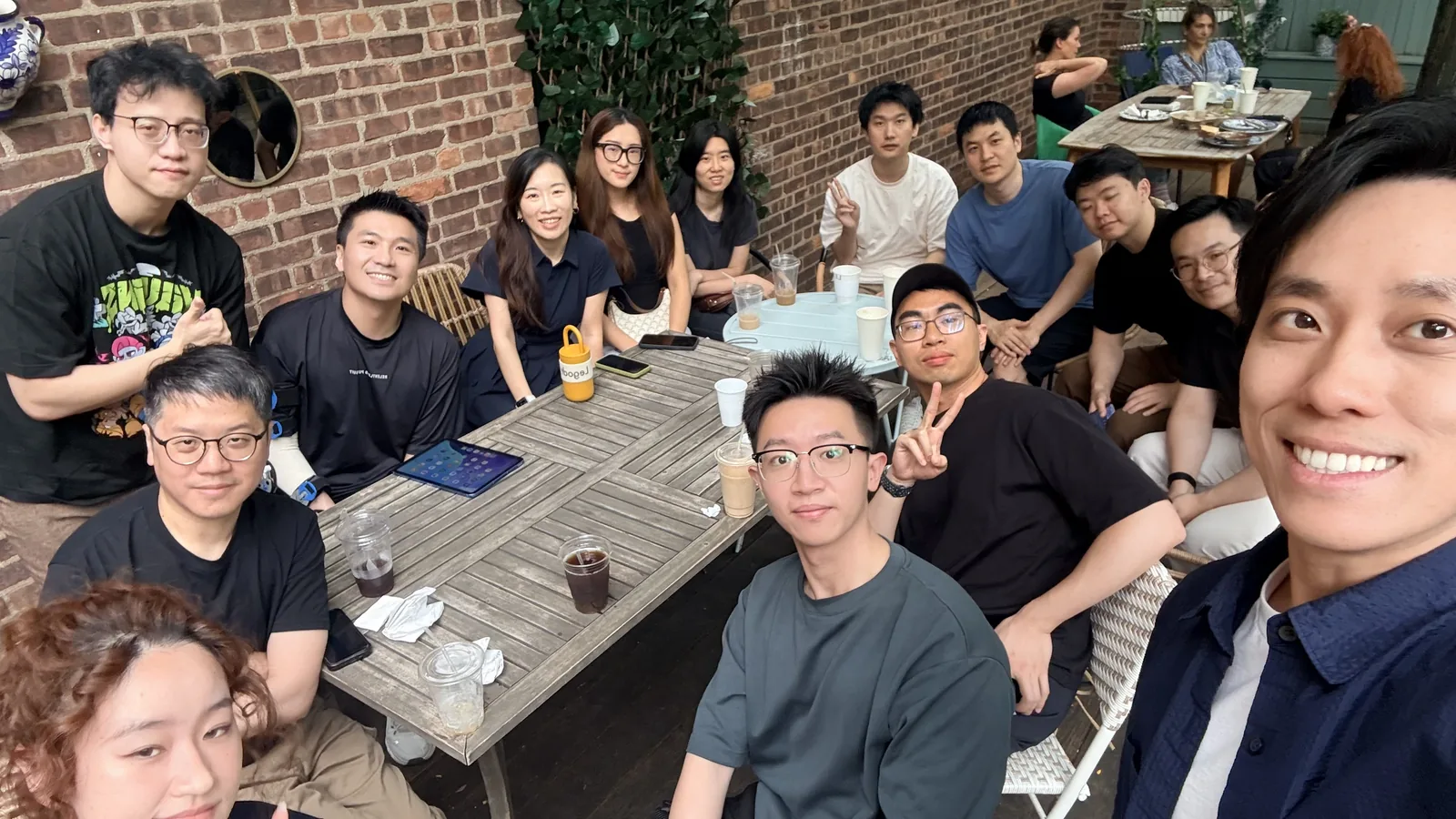
下面是我们真正聊到的东西。
Here's what we actually talked about.
···
01瓶颈不再是模型,而是 context 和治理。The bottleneck isn't the model anymore — it's context and governance.
几乎每个人都在追同一件事:把散落各处的 context —— 文档、决策、历史 —— 汇到一个地方,让 agent 能不断从中取用。这部分似乎是有解的。难的是 agent 开始“动手”之后。
一旦 AI 真的在干活,原来那套“以人为单位”的权限模型就悄悄失效了。agent 去读一份文档,它是“以你的身份”,还是某个 service 身份?出了事谁负责?好几个人都描述了同样的新麻烦:把 coding agent 发给一批人,几周内人人都在写小工具、都想 deploy,夹在中间的那个人就成了“谁能上线”的判官。有团队做了次内部调查,发现自研工具十个里九个多少有点问题,但大家还在互相 share。他们的解法是加一道审批流:一个 skill 要被 share,先过 architecture review,再过对应的 SME。
Nearly everyone is chasing the same thing — pull scattered context into one place an agent can continuously draw from. The hard part is what comes after the agent starts acting: when an AI reads a document, is it acting as you or as a service identity, and who's accountable? One team surveyed their internal tools and found nine of ten were off in some way, yet people kept sharing them — so they added an approval flow (architecture review, then the right expert) before any skill can be shared.
“我们过去管的是人。现在执行工作的是 agent —— 原来那套管理组织的方法,根本套不上去。”"We used to manage people. Now the thing executing the work is an agent — and the old way of managing an organization just doesn't map onto that."
02自己造、买现成,还是再等等。Build, buy, or wait.
在大公司里,每天的争论无非是:采购某家初创的工具、自己造,还是干脆等下一个平台版本把这件事变成免费?AI 产品已经同质化到你分不出两家的差别,所以往往是 pitch 决定谁赢。而每一份年框背后都藏着一丝担心 —— 签一年,你赌的是这家供应商十二个月后还在、而且还领先。
反过来,初创可以更大胆,围绕“AI 能做什么”重构整个组织,而不是把 AI 硬塞进去。但正是这种速度,让大买家犹豫。
At bigger companies the daily argument is: adopt a startup's tool, build it ourselves, or wait for the next platform release to make it free? Products have homogenized to where the pitch decides the winner — and every annual contract carries a quiet fear that the vendor won't still be around, and ahead, in twelve months. Startups can be braver and rebuild around what AI can do; that same speed is exactly why a big buyer hesitates.
03强监管行业很慢 —— 而这恰恰是机会。Regulated industries are slow — and that's the opening.
在医疗和金融,今天的 AI 大多是在自动化后台运营,而不是核心服务。在医院里,这意味着 claim、prior auth、核对保险 —— 全是和“看病”本身无关的活儿。能自动化,但落地难在信任和“能活多久”:如果我是一家大型 health system,我怎么知道这家初创两三年后还在?没人想把一个关键流程重建两次。
所以那些已经把权限、可审计性、数据安全做好的在位者,往往先被信任;他们在稳定的软件上叠加 AI,这就够了。大家比较认可的“让紧张的客户先上车”的做法,是一种类 A/B 的设置:一小部分 case 走人工 queue,其余走 agent queue,两边对比,加一道质检,失败的就 escalate。经济压力正让大型受监管买家变得急切 —— 但他们依然更偏好来自“可信玩家”的创新。
In healthcare and finance, today's AI mostly automates back-office operations, not the core service — claims, prior auth, insurance checks. The blocker is trust and longevity: a large health system won't rebuild a critical workflow twice for a startup that might vanish. So incumbents who already solved access control, auditability and security get trusted first, layering AI on stable software. The pattern people liked for easing a nervous client in: route a slice of cases to humans, the rest to agents, compare, quality-check, and escalate failures.
04真正的护城河是 domain 深度,不是又一个工作流工具。The real moat is domain depth.
这是当天的核心。当技术不再是门槛,优势就属于那个愿意钻进真实场景、把脏活累活做掉的人。有几个人原本是某个行业的门外汉,为了把它学透,真的去“卧底” —— 直接干上几个月那份工作 —— 因为那些 domain knowledge 根本没写在任何地方。
最让人记住的例子,是餐厅的“菜单工程”:哪道菜放哪、字号多大、配哪张图、换季怎么换,甚至后厨一块肉的出成率。做得好,营收可能提升三成左右 —— 而它背后是一座再大不过的数据山,通用模型自己根本搞不定。有人把 domain knowledge 比作矿:同一条矿脉只能采一次,所以问题就只是 —— 谁愿意下去挖。
This was the heart of it. When the tech stops being the barrier, the edge belongs to whoever goes deepest into a real-world scene — a few people had literally taken a job undercover for months to learn an industry, because the knowledge isn't written down anywhere. The example that stuck: restaurant menu engineering — placement, font size, photos, seasonal swaps, even kitchen yield — can move revenue ~30%, on a mountain of data no generic model nails.
“行业知识就像一座矿 —— 只能开采一次。所以真正的问题只是:谁愿意下去挖。”"Industry knowledge is like a mine — you can only extract it once. So the real question is simply: who's willing to go dig?"
05从 UX 到 AX —— 为 agent 而设计。From UX to AX — designing for agents.
讨论里冒出的下一层界面叫“Agent Experience”。它不是 agent 在页面上“看到”什么,而是每个网站、每个服务都要有 agent 可读的自我描述,几乎像一种新的 SEO。问题是:今天绝大部分互联网还不是 agent-readable —— 很多还出于安全顾虑被刻意挡掉 —— 所以一个助手能给的推荐,只取决于它真正能触达的那一小片网络。
而当交易开始发生在模型“内部” —— “帮我直接下单吧” —— 那套靠 tracking link 和搜索的归因打法就崩了。如果用户根本不点进你的页面,你又怎么知道需求从哪来?没人有答案;但大家都同意,它来得很快。
The next interface layer is "Agent Experience": every site and service will need agent-readable descriptions of what it offers — almost a new SEO. The catch is most of the internet still isn't agent-readable, often blocked out of security fear, so an assistant is only as good as the sliver of web it can reach. And when transactions happen inside the model ("just order it for me"), tracking-link attribution breaks — nobody had the answer, everyone agreed it's coming fast.
06基础模型在不断吞掉 agent 这一层。Foundation models keep eating the agent layer.
一个反复出现、也挺让人谦卑的观察:今天很多人用自定义 agent 拼起来的东西,明天基础模型自己就做了。有人描述他让模型搭一个简单 workflow,模型撞到 bug,然后 —— 没人让它这么做 —— 自己开始“修-测-修”的循环,直到跑通。“loop engineering”正悄悄变成内置能力。大家得出的结论都一样:别在模型马上要吸收的脚手架上投入太多。
A humbling, recurring note: much of what people wire up with custom agents today, the base model will just do tomorrow. One builder watched a model hit a bug and — unprompted — start its own fix-test-fix loop until it worked. "Loop engineering" quietly becoming built-in. The lesson: don't over-invest in scaffolding the model is about to absorb.
07AI 仍然替代不了的。What AI still can't replace.
有三样东西被反复提到。第一是问责:总得有一个签字的人,一个出事时能担责的人。第二是销售 —— 大公司的成交依然靠人和人之间的信任,而最有效的销售往往是最懂产品的那个人,而不是一个销售头衔。第三是 taste。当人人都能一夜之间做出同一个 idea,两个人之间的差距根本不在 idea,而在交付物本身。同一个 prompt 在两个人手里,结果天差地别,更好的那个赢。
Three things kept coming up. Accountability — someone has to sign, to be answerable when it goes wrong. Sales — big deals still run on human trust, and the best seller is whoever understands the product most, not a title. And taste: when anyone can ship the same idea overnight, the gap between two builders isn't the idea, it's the deliverable. Same prompt, two hands, wildly different results.
“现在谁都能一夜之间做出同一个 idea。两个人的差距不在 idea —— 在交付物。”"Anyone can ship the same idea overnight now. The difference between two builders isn't the idea — it's the deliverable."
08价值(和工作)最后会落在哪。Where the value — and the jobs — might land.
SaaS 正从“卖工具”漂向“卖交付的结果” —— 把事做成,再收钱,而不是把软件递给你让你自己做。在职业选择上,大家判断一家初创,看的不是 AI demo 多炫,而是创始人的过往战绩和真实的客户关系;first-time founder 很难取信,而“profitable”可以有十几种解释。而所有人都在盯的前沿,是能感知物理世界的模型 —— 对几个人来说,那个“哦,这玩意儿真成了”的瞬间,是坐一辆完全无人驾驶的出租车穿过真正混乱的车流,却忘了根本没人在开。
SaaS is drifting from selling tools to selling delivered outcomes — get it done, then charge. On career bets, the room judged startups less by the demo and more by the founder's track record and real customer relationships; a first-time founder is hard to trust, and "profitable" means a dozen things. The frontier everyone's watching is models that perceive the physical world — for a few people the "okay, this actually works now" moment was a fully driverless taxi through chaotic traffic, forgetting no one was driving.
···
如果要说有一条贯穿的主线,那就是:模型本身已经不再是最有意思的部分了。有意思的是它周围的一切 —— context、信任、问责、taste,以及愿意在一个真实问题上钻到底的耐心。够想到下个月了。
If there's one throughline, it's that the model is no longer the interesting part. The interesting part is everything around it — context, trust, accountability, taste, and the patience to go deep on a real problem. Good things to chew on until next month.
房间里的行业 / industries in the room银行与信贷 banking · 支付 payments · 电信 telecom · 流媒体 streaming · 商业地产 real estate · 医疗与临床 healthcare · 保险数据 insurance analytics · 网约车 rideshare · 大厂 AI 研究 big-tech AI · 早期创业 early-stage startups